
Mold testing and assessment
Testing tells you what it is. Everything else follows from that.
Here is the problem with mold: the same dark patch can be mold, mildew, efflorescence from a damp wall, or dirt. And the wall can look completely clean while the cavity behind it is wet and growing something. Looking at it harder does not fix that. Sampling does.
We test before remediation, so the work is scoped to what is actually there, and again afterwards, so “finished” is something that was measured rather than something we said.
Not sure whether your job needs a full assessment? Call and describe it. We will tell you if it does not — including when a dehumidifier is the whole answer.
(877) 923-8883Open 24 hours, 7 days a week, including emergencies
AssessmentAir and surface samplesIndependent laboratoryWritten reportClearance after
Why test at all
Three reasons, and none of them are paperwork.
Testing is not a formality that sits in front of the real work. It is what decides how big the real work is.
- 01
You cannot clean what you have not identified
Mold, mildew, efflorescence and plain dirt can look alike on a photograph, and none of them tell you what is inside the wall cavity. A sample is what turns a guess into a finding — what is growing, and how far it has travelled from the water source.
- 02
The scope of work follows the findings
A patch behind a bathroom tile and growth spread across a ceiling and two adjacent rooms are different jobs. The report is what says how much has to be contained, what has to be removed, and what can be cleaned and dried where it stands.
- 03
You cannot prove a job is finished without testing it
“It looks clean” is not the same as “it is clear”. Post-remediation samples taken the same way as the first set are what show the work did what it was supposed to, and a written clearance is the document a landlord, a buyer or an adjuster will ask for.
How it runs
What an assessment looks like, in order.
No promised turnaround, because it depends on the laboratory and the job. What you can count on is the sequence: nothing gets covered back up before there is a result, and nothing gets cleared without one.
- 01
A look at the property
Where the growth is, what it is on, and what the moisture readings say. Where the water came from, and whether it is still coming. Rooms that smell but show nothing get looked at too, because moisture and a cold spot on a thermal image often find growth before your eye does.
- 02
Air and surface samples, where they are warranted
Not every job needs a full sampling plan, and we will say so if yours does not. Where it is warranted, we take air samples from inside and outside the building and surface samples from the materials in question, so there is a comparison rather than a single number on its own.
- 03
Analysis by an independent laboratory
The samples go to a laboratory that has no stake in what the remediation costs. That distinction matters: a report produced by the company selling the cleanup is worth less to your insurer, your landlord and your buyer.
- 04
A written report of the findings
What was sampled, where, what the laboratory found, and what it means in plain language — with the photographs, readings and sample locations recorded so the next person can follow it.
- 05
Then the scope of work
Containment, removal, cleaning and drying, set to what the report actually shows. And at the end, the same sampling again, so the clearance is measured in the same terms as the finding.
On site
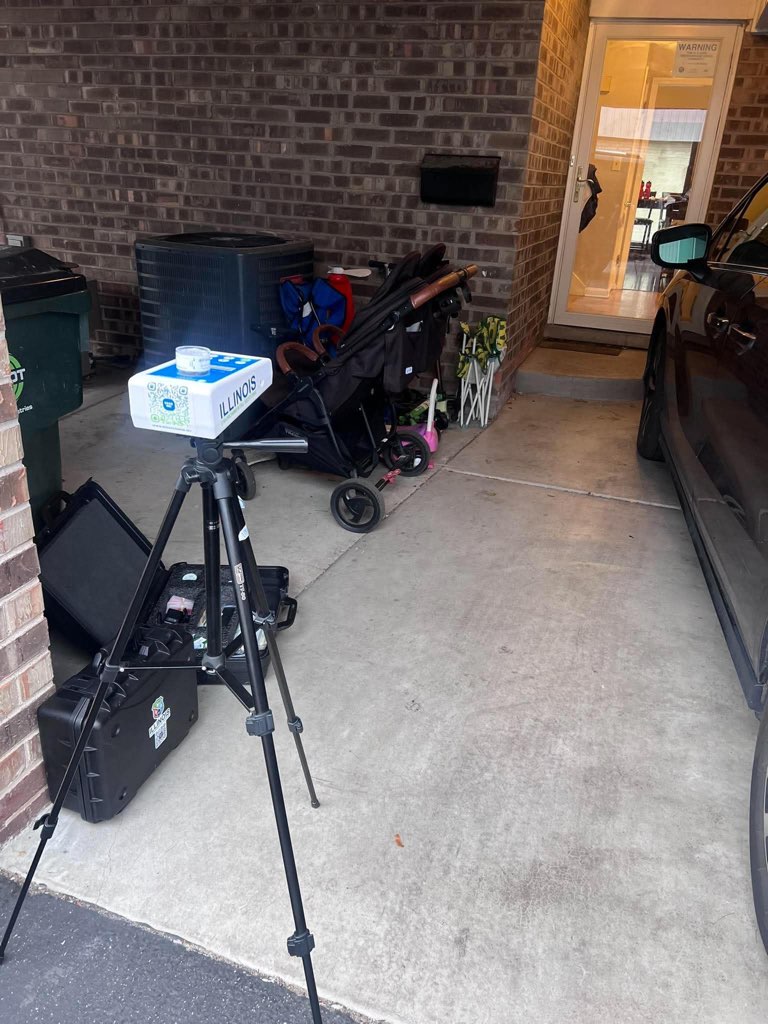
Sampling in a room, not in a petri dish on a shelf.
Air samples are drawn where people actually breathe — a bedroom, a basement, the room that smells — and compared with the air outside the building. Surface samples take a small lift from the material itself.
A dish left sitting out in a room collects whatever drifts across it. It tells you almost nothing about where the growth is, and nothing at all about what is inside a wall. That is why we sample, and why we take the readings alongside.
The standards behind this work: EPA lead-safe (RRP) and IICRC certification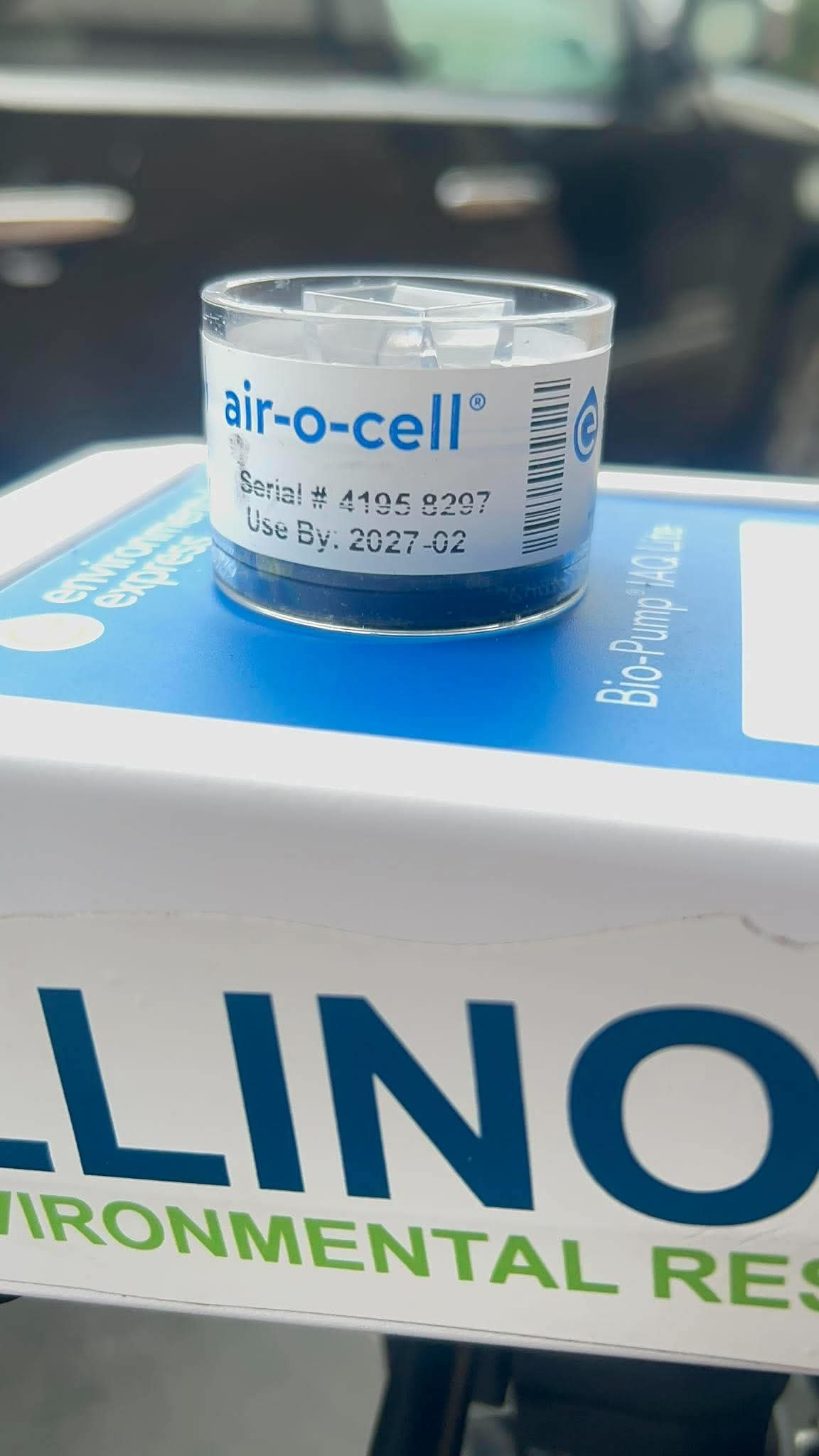
Sampled twice, the same way both times.
The second set is what makes the first set worth having. It is the difference between a report that says what was found and a clearance that says what was fixed.
Before any work
- Confirms what is growing, rather than assuming.
- Finds how far it reached, including behind walls.
- Gives the remediation a defined area to work to.
- Gives you something to hand an insurer or a landlord.
After the work
- Shows the treated area meets a normal condition.
- Is sampled the same way as the first set, so it compares.
- Produces a written clearance for the file.
- Tells you if something still needs another pass.
We do not certify a building as safe, and nobody honestly can. What a clearance says is that the samples taken after the work came back at normal levels for the area sampled.
Smell it but cannot find it? That is worth a call.
An assessment starts with a conversation and a look at the property. If remediation is needed, the report is what the work is scoped to — and if it is not, you will hear that too.
Chicago and the surrounding communities. And all of Chicagoland and the surrounding Chicago area. Licensed & insured · Illinois #100-21180.